
Eni's Art Club closed on April 19 2024
After 7 wonderful years, the Art Club closed on April 19, 2024 so that I can take an extended sabbatical from live online teaching and focus on my health and art.
My video and ebook stores on Teachable, Etsy and Gumroad continue to operate normally.
If you acquired video classes through the Club or purchased individually, you can still watch your lessons indefinitely without expiration date, for as long as my school is hosted on Teachable.
I am extremely grateful for the privilege of having taught so many talented artists!
-Eni Oken
LEARN HOW TO CREATE GREAT ART AND ZENTANGLE®
Start learning now


FIND OUT WHAT'S HAPPENING HERE
Latest Blog Posts


About me
“Hi there, my name is Eni Oken, I'm an artist and art instructor. For over 30 years, I've explored art and taught thousands of students. I’m obsessed with understanding art processes and principles, and then passing them along to others. It’s such a JOY to watch students blossom and grow; an incredible process of discovering and sharing what makes art visually appealing.”

The process of creating art is not restricted to those who are born with natural talent; you CAN learn how to create remarkable art in a relaxing and meditative way. It's all about the process and art enhancers, and following the steps that allow you to explore your own potential in a happy and nurturing manner so that you can reach ‘flow’.
-Eni Oken

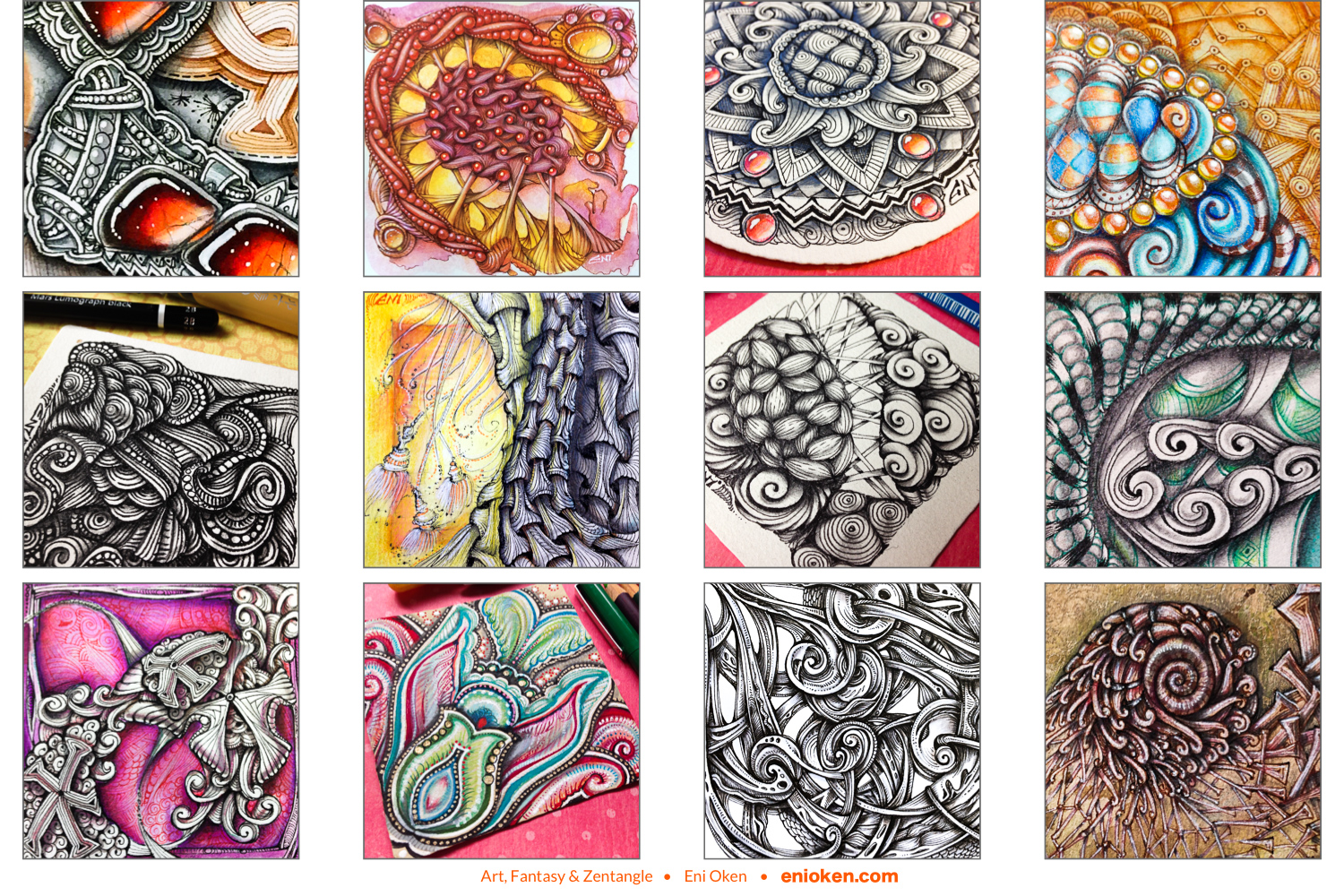
A LITTLE SAMPLE OF
MY ARTWORK


what people SAY ABOUT MY LESSONS
“I want to express my gratitude to Eni and everyone in this fun Art Club. Now only do I learn a lot from the lessons, but I also learn so much from my fellow club members. I love being in this Art Club. It reminds me of being back in Art School where everyone would encourage everyone and how much fun we had learning together. Eni - you did a great thing with this club and I wanted to say Thank YOU!”
-CATHY BOYTOS
“Eni is a great teacher. Her lessons are always inspiring with very clear instructions.
-ANOESKA W.
“I always wanted to create beautiful artwork and Eni made that possible. She inspires confidence and creativity that I never knew I had. Each lesson is an eye opener for me. Thanks so much Eni Oken”
-TARA PROVOST
“Every lesson you put out there is amazing, high quality work that shows great improvement in my art and output. I get excited for every new lesson from Art Club. doesn't matter what is is!!! Thank you Eni (my art hero)!!!”
-KRISTI BERG
“All of your tutorials mesh together so seamlessly. You allow room to create an individual style of your own whilst still being guided with informative instruction. This is what makes Art Club and the other tutorials you have designed, worth of continual support. Seamless and expert instruction. Thank you”
-LINA F.
“Eni is wonderfully talented, and her videos allow great access to developing my own talents as well! She is great at her craft, and I recommend art club highly.”
-KERRI CHALMERS
“Your ebooks are helping me with creativity. I am not an artist, and it is hard for me to create something. I do not have a lot of inspiration. I looked at a lot of resources for zentangle on the web, and when I found you, I was really surprised to see how your tiles were beautifull. Than, I wanted to do the same thing as you. :-). When I saw your ebooks, I have decided to try them. I did not know anything about shading, and I wanted to learn. I think you are almost the best with shading!!
There are thousands of zentangles on the web, it is fun to look at them, but when I look at them, I do not create. I begin to create when I open your books. They are well done, easy to follow, and make me realize that I can do something beautiful me either. Your books help me to create without stress, slowly, at my rhythm. When I open your books, and take paper and pen, I instantly be in harmony with my mind, and it makes me happy. It is like a gift. “-ALINE P.
“Walked in to the wonderful world of ‘Eni’! A fantasy world that enhances the land of Zentangle! Has enriched my work. Thanks Eni for sharing these fantastic details!”
-JASMINE JEHANGIR
